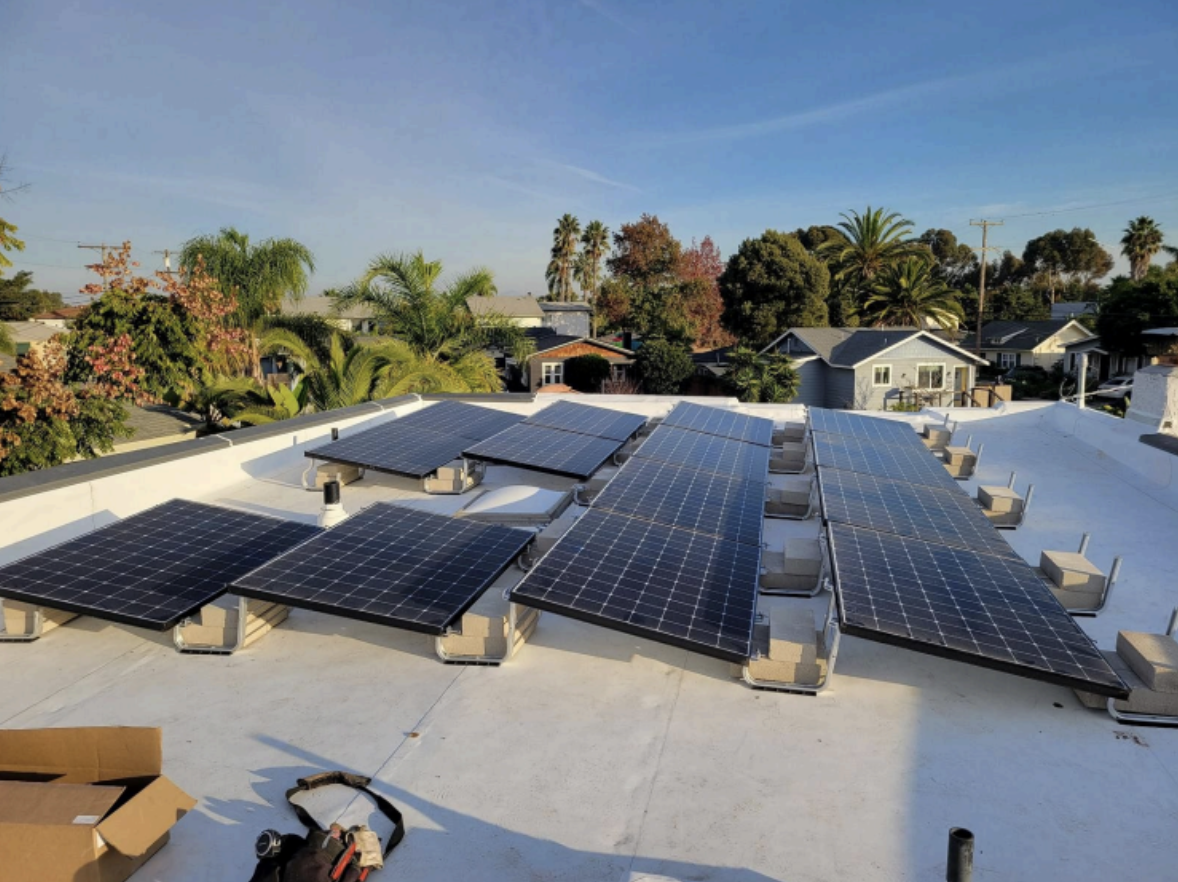
Cuyamaca Rancho State Park sits up in the Cuyamaca Mountains east of San Diego, at elevation, in one of the most fire-exposed landscapes in the county. The 2003 Cedar Fire burned through most of the park, and anything built or rebuilt up there since has had to answer a harder question than most residential roofs ever face: will this roof survive an actual wildfire event, not just look good in a brochure.
When it came time to reroof several of the park's structures, the project called for a roofing material that could deliver the look and profile of traditional tile without the weight, cost, and breakage risk of real clay or concrete tile at that elevation and in that terrain. We installed a synthetic tile roofing system, engineered composite tile built specifically for high fire risk and rough mountain weather conditions.
This project is a good example of choosing a roofing material for the actual environment it has to survive in, not just for appearance. Here is what went into the decision, the materials used, and the installation details that make a synthetic tile roof perform the way it is rated to in a place like Cuyamaca.
TL;DR
- The project used a synthetic composite tile system rather than natural clay or concrete tile, chosen for its lighter weight, impact resistance, and Class A fire rating.
- Synthetic tile at this site was installed over a fire-resistant underlayment system rated for the wildfire exposure common in the Cuyamaca Mountains.
- The lighter weight of synthetic tile reduced structural load concerns on the existing framing compared with what a full concrete tile reroof would have required.
- Mountain conditions, elevation, temperature swings, wind, and wildfire exposure drove nearly every material decision on this job.
Why does a roof at Cuyamaca Rancho State Park need different materials than a roof in the city?
Cuyamaca sits at roughly 4,000 to 5,000 feet of elevation in dense forest and chaparral terrain that has burned before and will burn again. State park structures in that kind of setting are built under stricter fire and wind exposure expectations than a typical residential reroof closer to the coast.
Temperature swings at elevation are also more extreme than in San Diego proper: hot, dry summers and genuinely cold winters with occasional snow. A roofing material has to handle thermal expansion and contraction across that range without cracking, on top of surviving wind-driven embers in a wildfire scenario.
The California Department of Forestry and Fire Protection (CAL FIRE) designates most of this region as a Very High Fire Hazard Severity Zone, which is part of what drove the material selection process for this reroof.
Why choose synthetic tile instead of clay or concrete tile?
Real clay and concrete tile have a long track record and can absolutely be fire-resistant roofing options, but they come with tradeoffs that mattered on this specific project. Concrete tile is heavy, often 900 to 1,100 pounds per square, which can require structural reinforcement on older framing. Both clay and concrete tile are also brittle under impact, and foot traffic or falling branches in a forested setting can crack individual tiles over time.
- Weight: synthetic composite tile runs roughly 250 to 450 pounds per square, a fraction of concrete tile, which reduced structural load concerns on the existing roof framing.
- Impact resistance: synthetic tile flexes rather than cracks under impact from debris, an important factor under tree cover.
- Fire rating: the synthetic tile system installed carries a Class A fire rating, the highest rating available for roof coverings, matching what natural tile can achieve but without the weight penalty.
- Freeze-thaw performance: synthetic composite material handles the elevation's occasional freeze cycles better than some clay products, which can be prone to spalling if moisture gets into the tile body and freezes.
More on how we evaluate tile options for different building types is on our tile roofing page.
What underlayment system goes under a fire-rated tile roof?
The tile itself is only part of a fire-rated roof assembly. What sits underneath it does most of the work in a real wildfire event, since embers and radiant heat can find gaps at eaves, ridges, and valleys even on a tile roof that looks solid from the ground.
Assembly components used on this project
- 1A fire-resistant self-adhered underlayment installed across the full deck, rated to work as part of a Class A assembly with the synthetic tile above it.
- 2Battens installed to create proper drainage and ventilation channels beneath the tile, sized for the specific synthetic tile profile.
- 3Ember-resistant venting details at ridge and eave lines, since open venting is one of the most common ways embers get into an attic space during a wildfire.
- 4Metal flashing at all valleys, walls, and penetrations, avoiding combustible flashing materials given the site's fire exposure.
Want a roofer to look at it first?
Free inspection across Southern California, with photos of exactly what we find.
What made installing a tile roof at this elevation different from a coastal job?
Access and weather windows were the two biggest practical differences. Materials had to be staged and hauled up mountain roads rather than delivered directly to a driveway, and crews worked around shorter weather windows given seasonal rain and the site's elevation.
Wind exposure at elevation also called for tighter fastening schedules than we would use on a similar roof closer to sea level. The synthetic tile system was installed with a fastening pattern and nail schedule specified for the site's wind zone, with additional attachment at ridges, hips, and roof edges where uplift forces concentrate.
This kind of site-specific detailing is standard on our public and institutional roofing work, and it is the same process our commercial roofing team runs on any building with elevated fire or wind exposure requirements.
How long is this roof expected to last, and what does it protect?
Synthetic composite tile systems like the one installed here typically carry manufacturer warranties in the 40 to 50 year range, with Class A fire ratings that do not degrade over that lifespan the way some coatings or treatments can. That is a meaningful number for a state park building where reroofing crews and material access are far more expensive to mobilize than on a typical residential job.
Beyond the roofing material itself, projects like this protect public buildings and, by extension, park staff and visitors who rely on those structures during wildfire season. A roof that survives an ember storm is one less ignition point in a fire that could otherwise spread from structure to structure.
The Insurance Institute for Business & Home Safety publishes independent research on which roofing assemblies actually perform in wildfire conditions, and the assembly used on this project aligns closely with their recommended approach: Class A covering, ember-resistant venting, and non-combustible flashing working together rather than any single material doing the job alone.
Does this apply to homes and buildings outside a state park?
Yes, and this is really the point of walking through a project like this in detail. Any property in San Diego's backcountry or foothill communities, places like Alpine, Julian, Ramona, or the eastern edges of El Cajon, sits in similar fire terrain to Cuyamaca, even if the fire hazard maps do not use the exact same zone designation.
The same logic applies: a Class A fire-rated tile assembly, correctly detailed underlayment and venting, and non-combustible flashing are available for homes at a much smaller scale than a state park building. If you are in one of these areas and weighing roofing materials, our areas served page covers where our crews work, and our contact page is the fastest way to get a fire-rated roofing assessment scheduled.
Frequently asked questions
About the author
The McKay Roofing & Solar Crew
Licensed roofers and solar installers (CSLB 1130793), on Southern California roofs since 1981
Read more about McKay Roofing & SolarIn a high fire risk area and thinking about your roof?
We install Class A fire-rated roofing assemblies, tile, synthetic, and metal, built for San Diego's backcountry and foothill fire zones. Get an assessment before fire season, not during it.