

Most homeowners asking about roof repair vs replacement have already been told two different things by two different contractors. That is not because roofing is mysterious. It is because one of them priced the leak and the other priced the roof.
A repair is the right call when the roof is structurally sound and the failure is local: a cracked boot, lifted flashing, a slipped tile, one bad valley. Replacement is the right call when the underlayment has aged out, the decking is soft, or you are on your third patch in two years.
This post walks the same checks our crews run before quoting: age against material, the pattern of the leak, decking condition, code and permit reality in Southern California, and cost per remaining year of roof life.
TL;DR
- Repair if the roof is under roughly 70% of its expected life, the leak is in one location, and the decking is firm.
- Replace if the underlayment is brittle, there are leaks in multiple planes, or you have paid for two or more patches in 24 months.
- Compare cost per remaining year, not sticker price: a $1,400 repair buying 3 years is worse value than a $16,000 roof buying 30.
- Tile roofs are the exception. The tile often outlives two underlayments, so a lift-and-relay beats a full replacement.
How old is my roof, and does that alone decide it?
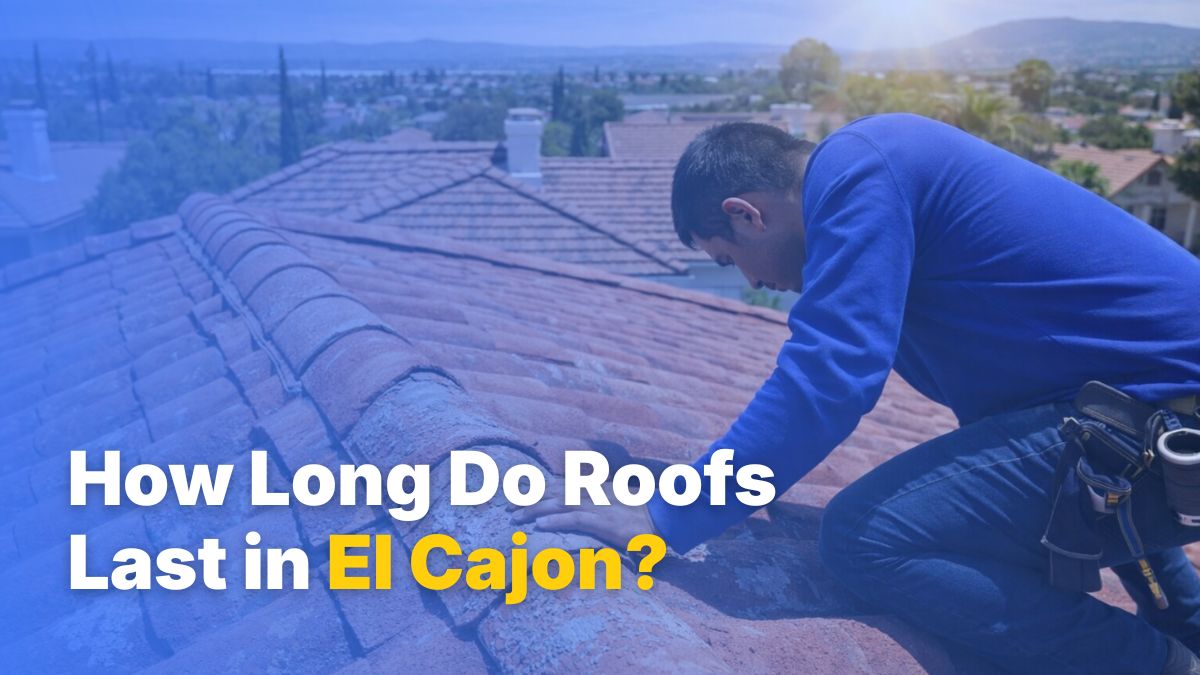
Age is the first filter because it tells you what the rest of the roof is doing, not just the part that is leaking. Materials in Southern California sun age on a fairly predictable curve.
- Three-tab asphalt shingle: 15 to 20 years here, less on a west or south-facing slope.
- Architectural / laminate shingle: 22 to 30 years.
- Concrete or clay tile: 50+ years for the tile, but 20 to 30 for the underlayment beneath it.
- Torch-down or modified bitumen: 15 to 25 years depending on cap sheet and ponding.
- TPO or PVC single-ply: 20 to 30 years at 60 mil.
- Standing seam metal: 40 to 60 years.
The practical rule: if the roof has used less than about 70% of that range, repair is usually defensible. Past 70%, a repair is a bridge, and it should be priced and understood as one.
Is this one leak, or is the whole roof telling me something?
Repairs succeed when the failure has a single, findable cause. They fail when the leak is a symptom of general wear.
Signs it is a local failure (repair)
- Water shows up in one ceiling spot, always after driving rain from the same direction.
- The stain sits directly below a penetration: vent, skylight, swamp cooler, solar stanchion, chimney.
- You can point to physical damage - a cracked plumbing boot, a lifted piece of step flashing, three slipped tiles.
Signs the roof is done (replacement)
- Stains in two or more rooms on different roof planes.
- Underlayment tears when touched or comes away as dry, brittle flakes.
- Nail heads backing out across whole slopes, or shingles curling at the field rather than the edges.
- Ponding on a flat section that never fully dries, with blisters in the cap sheet.
What does the decking tell us that the surface cannot?
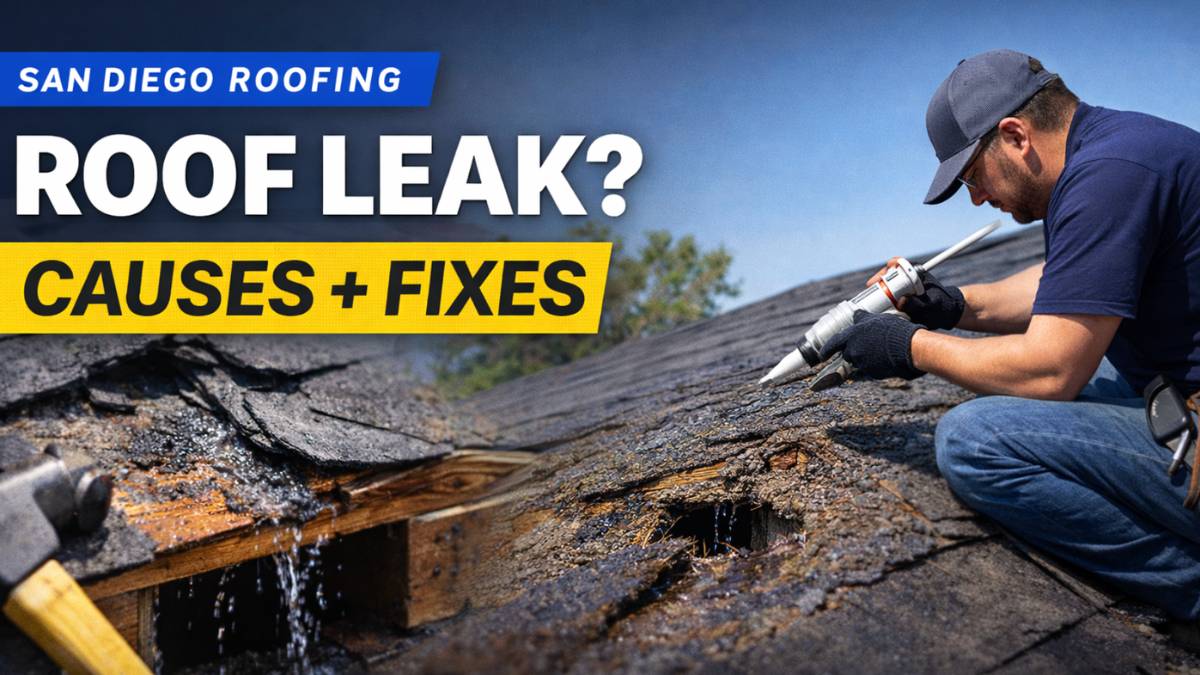
The single most expensive surprise in roofing is soft decking, and it is invisible from the ground. A roof can look tidy while the plywood under a valley has been damp for four winters.
We check it two ways. From above, we walk the plane and feel for sponginess and dips between rafters. From below, in the attic, we look for daylight, dark water tracking down rafters, and rusted nail shanks.
- 1Firm decking, isolated damage: repair, replace one or two sheets if needed.
- 2Soft decking under a single penetration: repair, but expect $150 to $400 per sheet of replaced plywood.
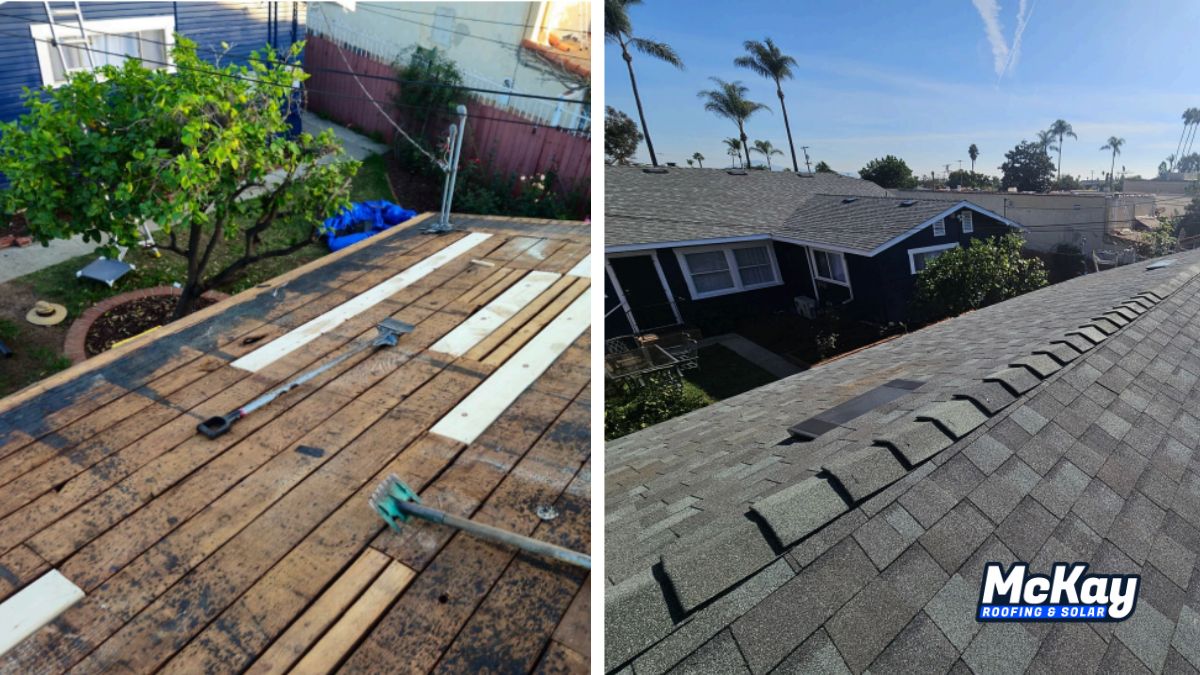
- 3Soft decking in multiple areas: replace. Patching over compromised sheathing is how a leak becomes a framing repair.
Water does not travel in a straight line. It follows the underlayment until it finds a nail hole, which is why the wet spot on your ceiling is rarely under the actual failure.
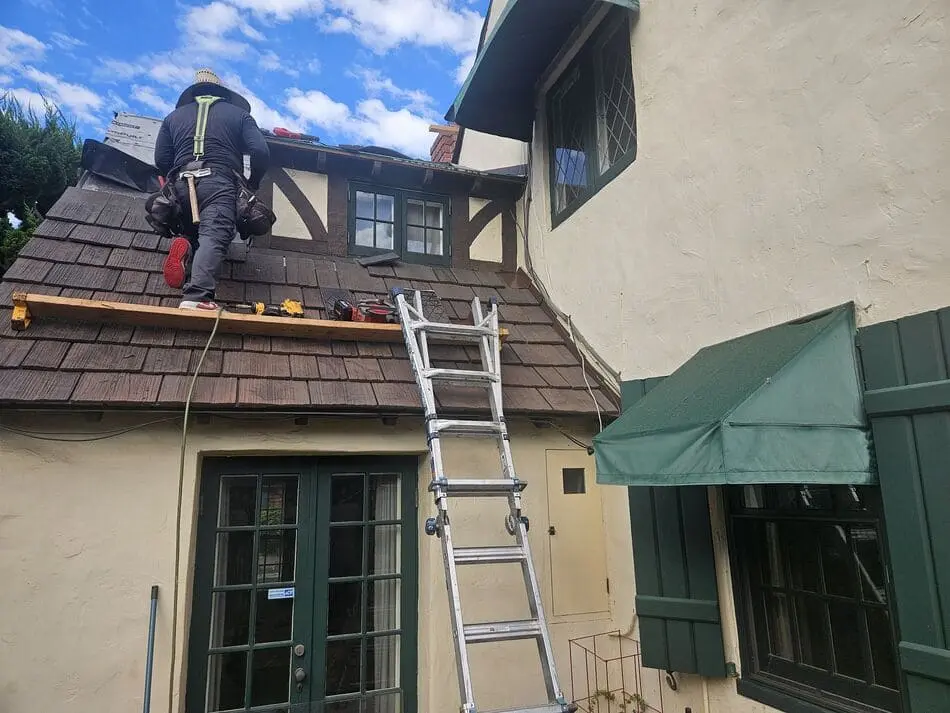
Want a roofer to look at it first?
Free inspection across Southern California, with photos of exactly what we find.
What is different about this decision in Southern California?
Our climate wears roofs unevenly, and that changes the math compared with advice written for wetter states.
- UV, not rain, is the main killer. Shingles and cap sheets dry out and lose flexibility long before they look worn out.
- Rain arrives in bursts. Long dry spells then heavy atmospheric-river rain means drainage and flashing take the abuse, not the field.
- Coastal salt air attacks fasteners and metal flashing much faster within a few miles of the beach - Ocean Beach roofs and Riverside roofs do not age alike.
- Wildfire zones push tile, metal and Class A assemblies, which shifts replacement toward materials that also last longer.
- Title 24 and cool-roof rules apply to most re-roofs, which affects material choice and permit scope on replacement, not on a small repair.
If you want the local detail for your city, our Southern California service areas pages break down conditions block by block, and our roof repair service page covers what a repair visit includes.
How do the real numbers compare in 2026?
Here are the ranges we quote in Southern California. Your roof will land inside them based on pitch, access, layers to remove and material choice.
- Minor repair (boot, small flashing fix, a few shingles or tiles): $450 to $1,200.
- Moderate repair (valley rebuild, skylight reflash, decking sheet or two): $1,200 to $3,500.
- Section replacement (one slope or one flat area): $4,000 to $9,000.
- Full shingle replacement, average home: $13,000 to $24,000.
- Tile lift-and-relay with new underlayment: $11,000 to $20,000.
- Flat roof, new 60 mil TPO or torch-down: $12 to $20 per square foot installed.
We break costs down further in our post on real 2026 roof repair prices, and full-system pricing lives on the roof replacement page.
Will insurance pay, and how long can I wait?
Homeowners policies in California generally cover sudden, accidental damage - wind lifting a section, a branch punching through - and generally exclude wear, age and deferred maintenance. That distinction decides most claims.
- 1Photograph everything before anyone climbs up, including the interior stain and the date.
- 2Stop the water with a tarp or temporary patch. Insurers expect mitigation and will ask.
- 3Get a written inspection report that separates storm damage from age-related wear.
- 4File before your policy's reporting window closes, usually within a year of the event.
On timing: a small leak in June can wait for a scheduled repair. The same leak in late November should not. Once decking stays wet through a rainy stretch, you are adding sheathing and sometimes drywall and insulation to the bill. The California Department of Insurance publishes plain-language guidance on documenting property claims at insurance.ca.gov, and the NRCA maintains homeowner resources on roof system condition. We handle documentation on our roof insurance claims service.
What is the fastest way to decide with confidence?
Run these five questions in order. Two or more "yes" answers in the second column means you are replacing, not repairing.
- 1Is the roof past 70% of its expected life for its material?
- 2Are there leaks on more than one roof plane?
- 3Is the underlayment brittle, torn, or already exposed?
- 4Have you paid for two or more repairs in the last two years?
- 5Did the inspection find soft decking in more than one area?
If you answered no to all five, get the repair done properly and move on. If you are somewhere in the middle, ask for both numbers in writing on the same visit - a scoped repair and a full replacement - so you are comparing options, not sales pitches.
Frequently asked questions
About the author
The McKay Roofing & Solar Crew
Licensed roofers and solar installers (CSLB 1130793), on Southern California roofs since 1981
Read more about McKay Roofing & SolarNot sure which one your roof needs?
We will inspect it, show you photos of what we found, and quote both options in writing - repair and replacement - so you can decide with real numbers.