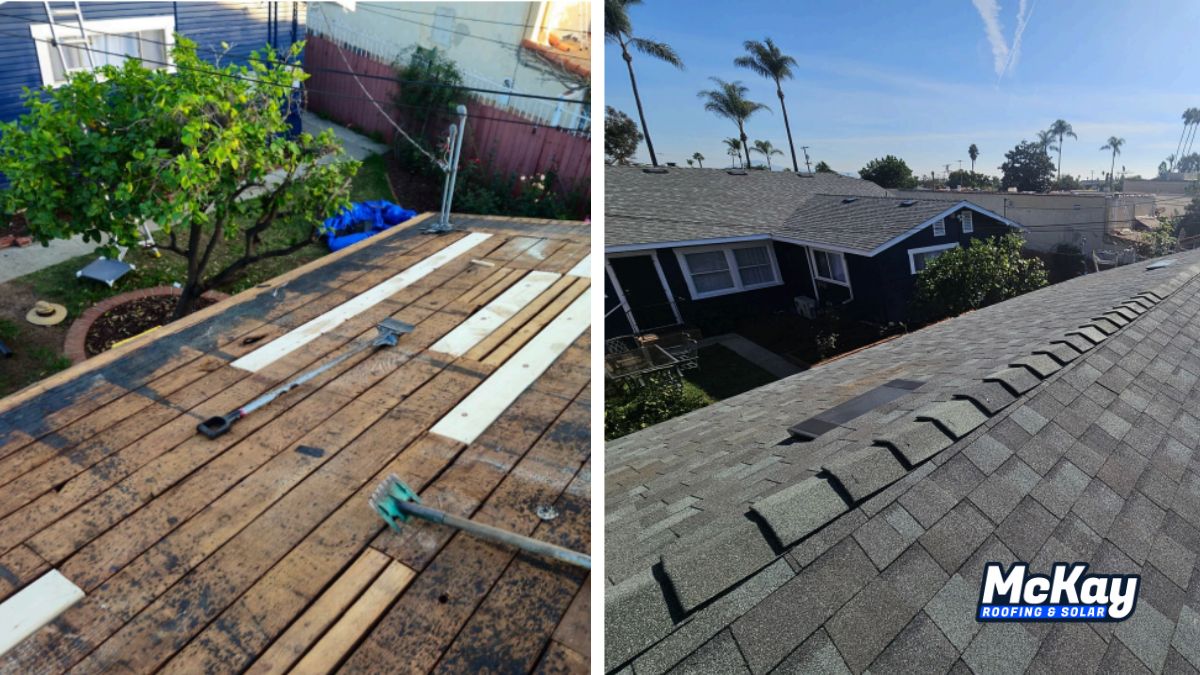
We recently wrapped up a flat roof replacement out in Ocean Beach, right off Bacon Street, and it is one of those jobs that feels good to look back on once it is finished. If you know OB, you know the setting: close to the water, salty air, sun for most of the day, and a mix of older homes and rentals that have taken a beating over the years. Flat roofs out here simply do not age the same way inland roofs do.
This particular roof had an older cap sheet system that was completely done. The seams were opening up, the surface was worn through in places, and it had already been patched more than once. At a certain point you stop spending money on repairs and just replace the thing properly, and that is exactly the conversation we had with the homeowner here.
Below is what we actually found once we got up there, why a full tear-off was the right call instead of another patch, and what went into the new torch-down system that is now protecting the property.
TL;DR
- The existing cap sheet near Bacon Street had separating seams, worn surface areas, and a history of prior patch repairs.
- We did a complete tear-off to the decking and found damaged sheathing underneath, which is common on older Ocean Beach flat roofs.
- The new roof is a torch-down modified bitumen system, chosen for its resistance to UV, heat, and coastal moisture.
- Flat roofs in Ocean Beach and along the coast tend to fail faster than inland roofs because of constant sun, salt air, and slower drainage.
What did we actually find on this Bacon Street roof?
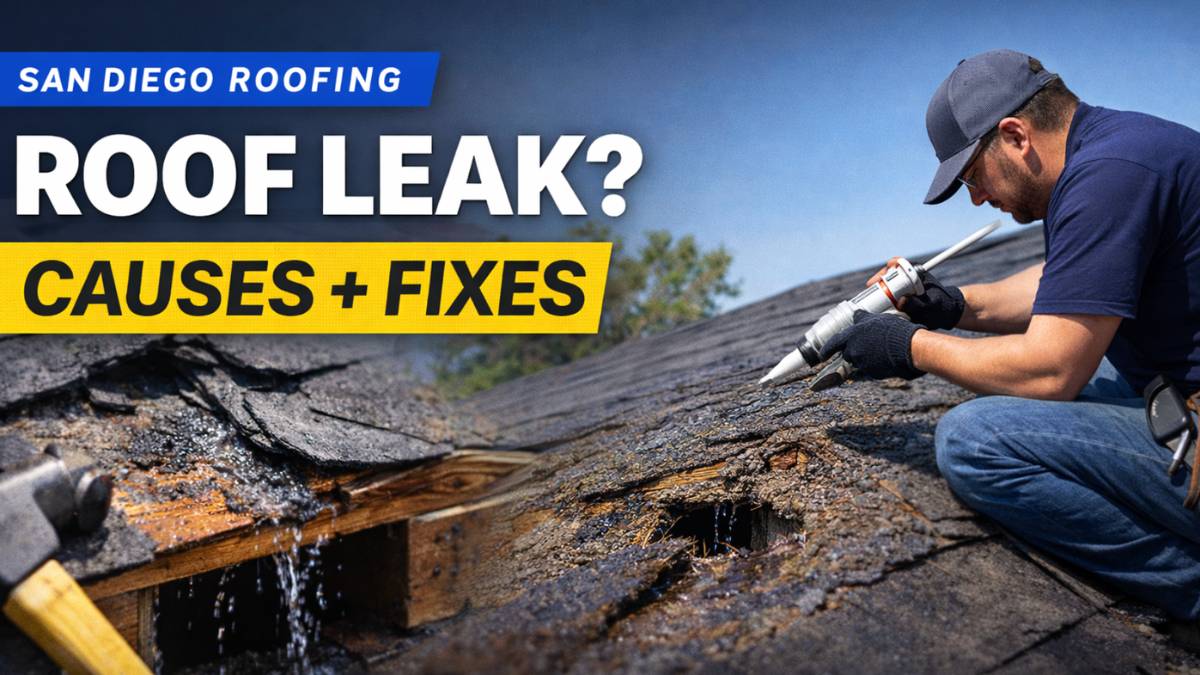
When we got up there, it was clear right away that this was not just a cosmetic issue. The seams in the old cap sheet were starting to separate, there were visibly weak spots across the surface, and you could feel areas underfoot that were not solid anymore. That combination is pretty typical for older flat roofs in Ocean Beach, especially around Bacon Street, Newport Ave, and down toward Sunset Cliffs, where the marine layer rolls in most mornings.
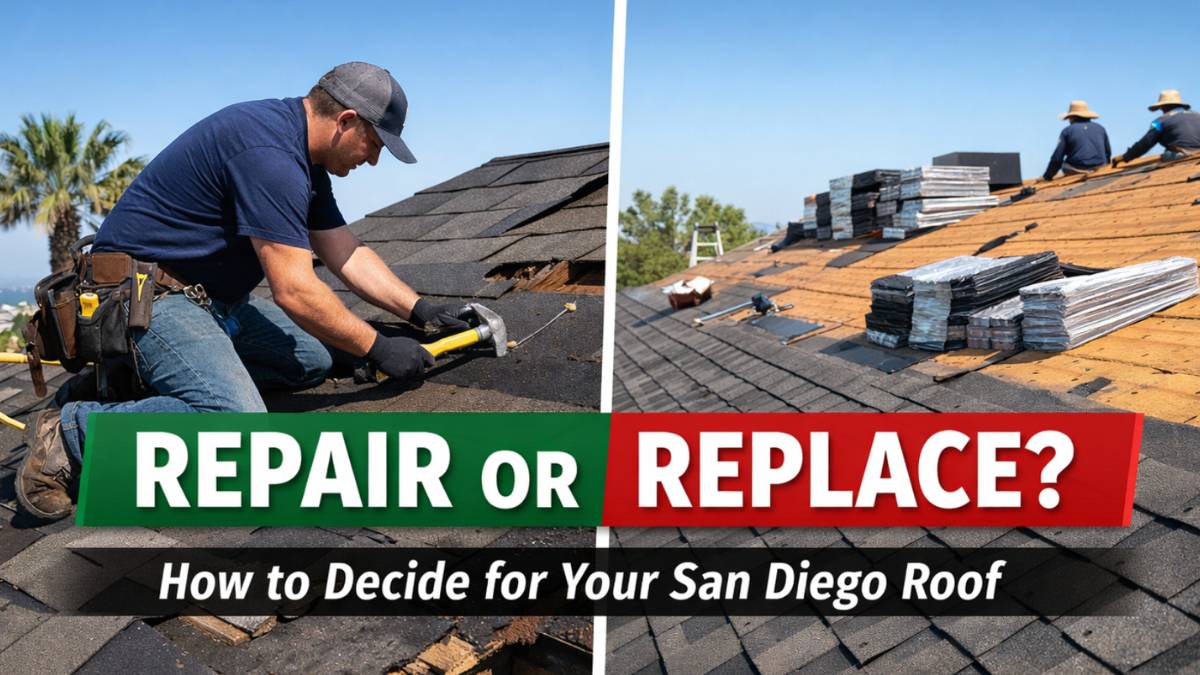
Homeowners ask us the same three questions on almost every one of these calls: can you just patch it, do I really need a full replacement, and how much longer can I get out of this roof? The honest answer is that sometimes a patch is the right move. But once a system starts failing across multiple areas the way this one was, patching becomes a short-term band-aid rather than a real fix. If you are seeing multiple problem spots on your own flat roof, it is usually time to start thinking about a roof replacement instead of another round of patches.
Why did we tear off the whole cap sheet instead of going over it?
We went with a full tear-off on this one. No going over the existing system, no shortcuts. Everything came off so we could get down to the decking and see exactly what condition it was actually in, not just what it looked like from the surface.
Why this step matters on a flat roof
- Flat roofs hide problems well. From the top, a section can look fine while the decking beneath it is already compromised.
- Moisture sits longer on flat surfaces than on a pitched roof, which means rot and soft decking are more common than most homeowners expect.
- Layering a new membrane over a weak deck just builds a new roof on a bad foundation, which is how systems fail early.
As soon as we opened this one up, we found areas of damaged decking underneath the old cap sheet, which was not surprising given the roof's age and location. We removed the bad sections, reinforced what needed it, and confirmed everything was solid before installing anything new on top.
Why did we choose a torch-down system for this flat roof?
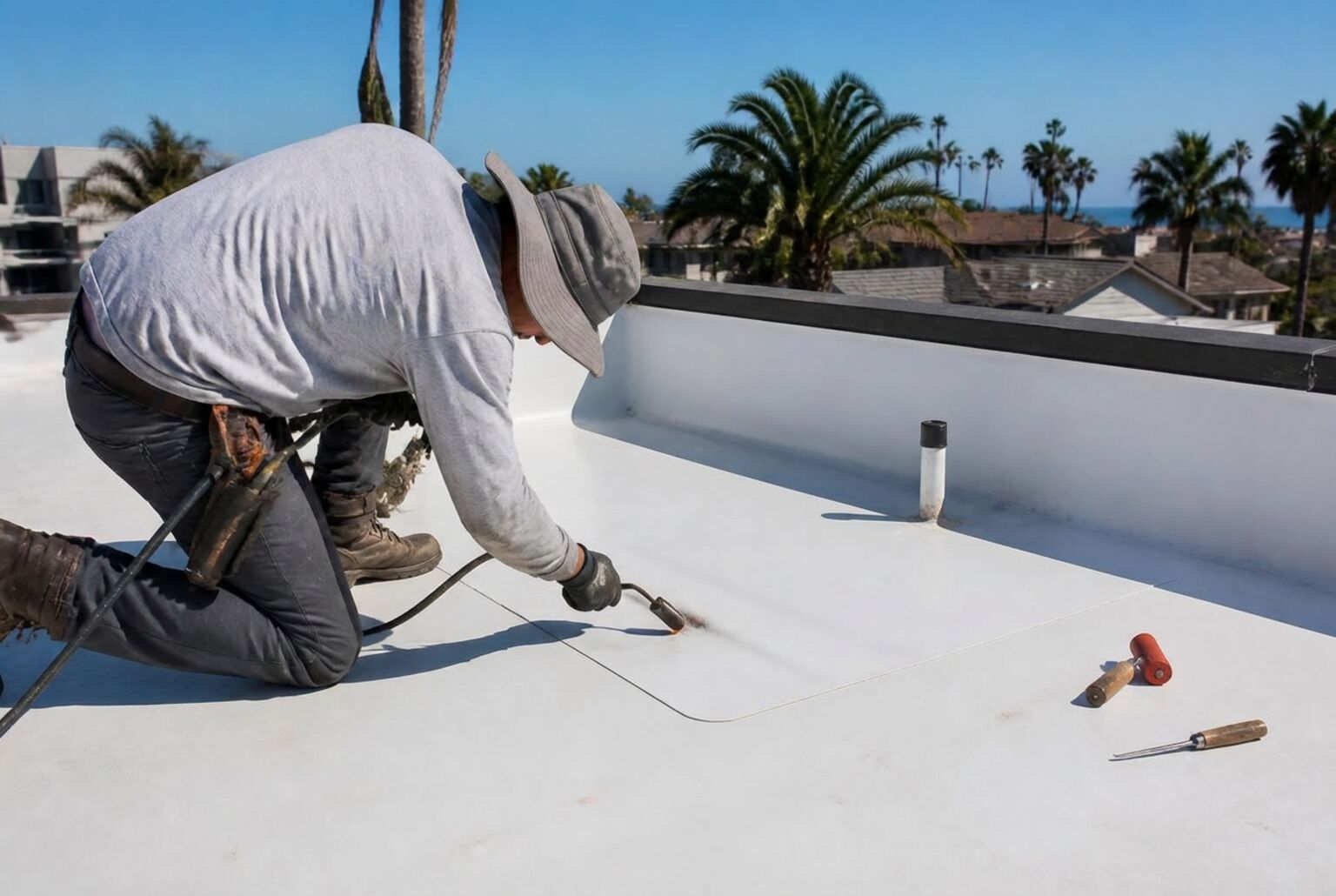
Once the decking was prepped and repaired, we installed a brand new torch-down roofing system. For flat roofs in this part of San Diego, torch-down is one of the strongest options available. It forms a fully sealed membrane that holds up well against constant sun exposure, summer heat, and the coastal moisture that comes with living a few blocks from the ocean.
We made sure every seam was clean, properly bonded, and sealed tight before calling the job finished. That detail work at the seams and transitions is really what separates a torch-down roof that lasts fifteen or twenty years from one that starts giving problems again within a couple of seasons. For more on how this material compares with other flat roof options, our torch-down roofing page covers the system in more detail, and manufacturer specs for modified bitumen systems are published by suppliers like GAF.
Want a roofer to look at it first?
Free inspection across Southern California, with photos of exactly what we find.
Why do flat roofs in Ocean Beach fail faster than inland roofs?
This is something we see constantly, especially throughout the 92107 area. Ocean Beach roofs deal with a combination of conditions that inland San Diego roofs simply do not face to the same degree.
- Constant UV exposure from long, mostly clear days near the coast.
- Salt in the air coming off the ocean, which attacks fasteners and seams faster than inland climates.
- Cooler nights that create condensation cycles underneath the membrane.
- Flat surfaces where water does not run off as quickly as it would on a pitched roof.
A lot of people assume a roof should last 25 to 30 years no matter where it sits, but that is not always realistic in a coastal environment like OB. Maintenance and proper installation matter far more here than the material's rated lifespan on a spec sheet. The Energy.gov resources on roofing materials cover some of this UV and heat exposure math in more general terms, but coastal salt exposure is a factor we mainly track through our own field history.
What is it like doing roofing work throughout Ocean Beach?
We do a lot of work around Ocean Beach, Point Loma, and Mission Beach, and every job out here has a bit of its own personality. You get tight streets, older builds, a real mix of roof types on the same block, and homeowners who genuinely care about their property, whether they live in it or rent it out.
It is not cookie-cutter work, and this Bacon Street project was a good example of that. Not a massive job in square footage, but one that needed to be done right the first time. Finishing up and looking out over OB from a clean, solid roof is a good feeling every time. If you are curious what other coastal roofing jobs around the region look like, our project gallery has more examples.
Who does McKay handle flat roof replacements for in Ocean Beach?
At McKay Roofing & Solar, we handle flat roof replacement projects throughout Ocean Beach and greater San Diego. That includes homeowners living in their properties, rental property owners, property managers overseeing multiple units, and investors fixing up older buildings before resale.
We keep the process simple no matter who we are working with. We tell you what is actually going on with the roof, what your real options are, and what makes sense long term instead of overselling a bigger job than the roof needs. You can see the wider area we cover on our areas served page.
What should you do if your flat roof is showing similar signs?
If your flat roof is starting to crack, leak, or just looks worn out the way this one did, it is worth getting ahead of it rather than waiting for a bigger failure. We will come take a look, walk the roof with you if you want to see it firsthand, and give you a straight answer on whether it needs a repair or a full replacement.
Not sure where your own roof stands? A quick roof inspection is the fastest way to find out before a small issue turns into interior damage, and you can reach our team directly through the contact page to get a visit scheduled.
Frequently asked questions
About the author
The McKay Roofing & Solar Crew
Licensed roofers and solar installers (CSLB 1130793), on Southern California roofs since 1981
Read more about McKay Roofing & SolarDealing with an aging flat roof near the coast?
We will inspect it, explain exactly what we find, and give you an honest answer on repair versus replacement, no upsell required.