If your roof needs work and there is solar sitting on top of it, the first question out of most people's mouths is whether the reroof will cost them their NEM 2.0 grandfathering. It is a reasonable question. It is also, most of the time, aimed at the wrong thing. The fear should be pointed at the equipment list, not at the roofing work itself.
This page explains what your grandfathering actually is, what the tariff rules literally say, where the real risk sits, and what we do on our end to keep the paperwork boring. Every tariff statement below carries a source and a last-verified date, because rules change. If you are reading this long after the verification date, check the source before you rely on it.
We hold both sides of this job under one license, CSLB #1130793 with B, C-10, and C-39 classifications, which matters more than it sounds like it should. Keep reading and you'll see why.
TL;DR
- NEM 2.0, called Schedule NEM-ST at SDG&E, guarantees a 20-year run from your original interconnection date, regardless of roof work, as long as the generating facility's capacity doesn't materially change.
- The tariff's headroom for changes is the greater of 10% of your original nameplate capacity or 1 kW. A true like-for-like panel removal and reinstallation uses none of it.
- The risk isn't the roof. It's bundling a system change, like adding panels, replacing a cracked module with a higher-rated one, or swapping the inverter, into the same project without tracking it against that threshold.
- San Diego's own permit bulletin requires the reinstallation to be performed by a contractor holding a C-10 or C-46 license, and it explicitly forbids altering the original equipment under that permit.
What exactly is NEM 2.0 grandfathering?
If your solar was interconnected before April 15, 2023, you're on an older net metering tariff, and California guarantees you a defined run on it. The CPUC states it plainly: customer-generators are allowed to remain on the NEM 2.0 tariff for 20 years from the date they interconnected (CPUC, Net Energy Metering and Net Billing).
In San Diego, the tariff has a different name than the one everyone says out loud. SDG&E's NEM 2.0 is Schedule NEM-ST, Net Energy Metering Successor Tariff. SDG&E hit its NEM 1.0 cap on June 29, 2016, and interconnections after that went onto NEM-ST. Its own language: eligible customer-generators may remain on the schedule for 20 years from the original year of interconnection (SDG&E Schedule NEM-ST).
Two things worth noticing. The clock runs from interconnection, not from the day the panels went on the roof and not from the day you signed. And it's tied to the generating facility, not to you personally, which is why the rules care so much about whether that facility has changed.
Why does losing NEM 2.0 actually matter, versus NEM 3.0?
Since April 15, 2023, new interconnection applicants take service on the net billing tariff, informally NEM 3.0, adopted by the CPUC in Decision D.22-12-056. The practical difference for a homeowner is what an exported kilowatt-hour is worth. Under net billing, export credits are well below retail rates, which changes the arithmetic of a system that was designed and sold on the assumption that the grid would bank power at something close to retail.
That's why "will this cost me my NEM 2.0" is the first question out of people's mouths when we tell them their roof needs replacing. It's a reasonable question. It's also usually the wrong thing to be afraid of - the fear is typically pointed at the roof when it should be pointed at the equipment list. See our solar cost breakdown for 2026 for how NEM 3.0 pricing actually works.
What does the tariff actually test when equipment changes?
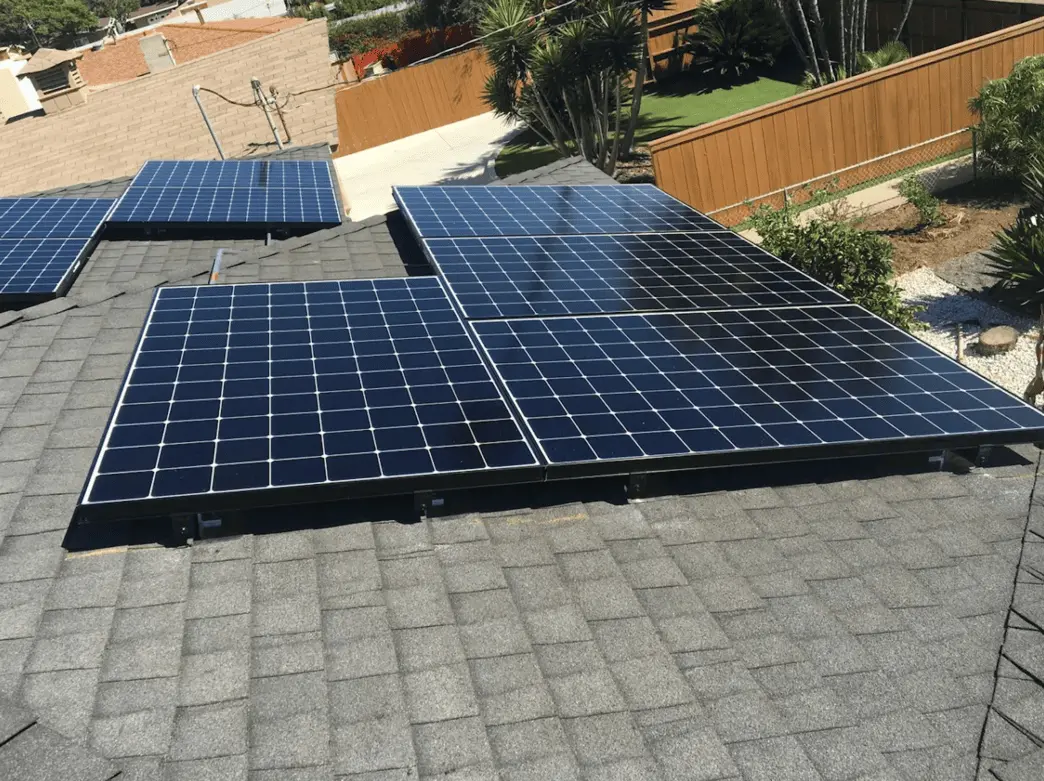
Here's the case we're talking about: same site, same modules, the exact ones that came off, same inverter, same string layout, same module count. New underlayment, new roof covering underneath. Nothing about the electrical system changed except that it spent two weeks in your garage.
The tariff test for keeping your transition period is written around capacity, not around whether the roof underneath got replaced. SDG&E's tariff language: generating facilities eligible for the 20-year transition period that are modified or repaired remain eligible for the remainder of the period as long as the modifications don't increase the facility by more than the greater of 10% of the original nameplate rating capacity, or 1 kW (SDG&E Schedule NEM-ST).
SDG&E puts the same rule in homeowner language on its NEM page: systems 10 kW and smaller can be increased by no more than 1 kW; systems larger than 10 kW by no more than 10% of existing size. Exceed it, and SDG&E states the customer becomes responsible for non-bypassable charges on 100% of the net kWh delivered.
- A 6 kW array: the threshold is the greater of 1 kW or 600 W, so 1 kW.
- A 12 kW array: the greater of 1 kW or 1.2 kW, so 1.2 kW.
- That headroom is your buffer. A true like-for-like reinstall consumes none of it.

Want your roof checked before panels go up?
Free inspection across Southern California, with photos of exactly what we find.
How does a reroof actually put NEM 2.0 at risk?
Every case we've seen where a homeowner had a real problem, the problem was a system change bundled into a roof project, not the roof project itself.
Adding panels while everything's already down
It's a completely natural thing to ask while an array is already on the ground, and it's the single fastest way to eat your 1 kW of headroom. Adding capacity is a legitimate decision, but it's a separate decision with its own consequences, and it should be made deliberately, with the threshold math in front of you, not as an upsell on reinstall day.
A cracked module gets replaced with a different one
If a module cracks during removal, and anyone who says it never happens hasn't done enough of these, you can't usually buy the identical module you bought years ago. The replacement carries a different nameplate rating, often higher. Replace one module, nothing moves. Replace six on a small array and you can walk past 1 kW without anyone writing "system expansion" on a single document. This is why we photograph and log every module by serial before it comes off, and why we tell you before we order a replacement, not after.
Swapping the inverter while everything's disconnected
SDG&E's own interconnection application lists Physical Changes to an Interconnected NEM or NEM-ST Generating Facility as its own application type, describing a request for modification due to changes like adding panels or changing inverters or turbines. The utility has a form for this. Filing it is not automatically bad. Filing it without knowing you filed it is bad.
Adding a battery on the same invoice
Batteries are usually the right answer in SDG&E territory, since peak runs 4-9pm and self-consumption is where the value is now, not export credits. But a storage addition is a change to the interconnected facility and belongs in its own conversation with its own paperwork, not stapled to a roofing invoice. See our solar battery installation page if you want to talk about it deliberately.
Notice what isn't on this list: new shingles, new tile, new underlayment, new flashing, a fully rebuilt deck. None of that touches the nameplate capacity of your generating facility. See roof replacement for how that side of the job works.
What does the city actually require for a reroof under solar?
The City of San Diego addresses this case directly. Where existing roof-mounted PV is removed for renewal of the roof covering, the original approved record plan set must accompany the submitted PV plans to confirm the system was permitted and installed, and a pre-removal inspection of the existing system may be required.
The bulletin is explicit that the permit for reinstallation of the existing PV does not allow any alteration of the original equipment or system, and that the PV work for reroofing purposes shall be performed by a qualified contractor holding a C-10 or C-46 license (City of San Diego Information Bulletin 301).
Read that last requirement twice, because it's the whole reason this job goes sideways when it's split between two companies. The roof needs a roofing classification. The panels need an electrical or solar classification. Somebody has to hold both, or you're coordinating two contractors who each think the other one owns the seam, and the seam is where the leak is.
What should I check right now if my panels are already off the roof?
If a roofer has your panels on the ground right now, or you're holding a proposal that bundles "reroof plus panel reset" with a line item you don't recognize, three things are worth doing today.
- 1Get the proposal's equipment list and compare it to what's actually on your roof: module count, module model, inverter model. If any of those three changed, that's a system modification you want to know about before it's energized.
- 2Find your interconnection paperwork. Your permission-to-operate letter has your original nameplate capacity on it - that's the baseline the 10%-or-1-kW test is measured against.
- 3If something has already changed, call SDG&E rather than guessing. They administer the tariff. We don't, and neither does the company that did the work.
Send us your plan set and we'll read it before you sign anything. If your panels need to come off for a roof inspection or roof replacement first, or if you need a proper solar panel removal and reinstallation, book an assessment and we'll walk the math with you before any panel comes down.
Frequently asked questions
About the author
The McKay Roofing & Solar Crew
Licensed roofers and solar installers (CSLB 1130793), on Southern California roofs since 1981
Read more about McKay Roofing & SolarKeep your NEM 2.0 while you fix the roof underneath it
Send us your plan set and interconnection paperwork and we'll tell you honestly whether the reroof puts your tariff at risk, before anything comes off the roof.