Property managers do not have the luxury of guessing on a roof. A leak on a managed property turns into tenant calls, and a roof project that runs long or over budget turns into a conversation with an owner who was expecting a number, not a range. That is the environment we worked in on this project for Good Life Property Management in San Diego, where the building had two different roof types that needed two different fixes on the same visit.
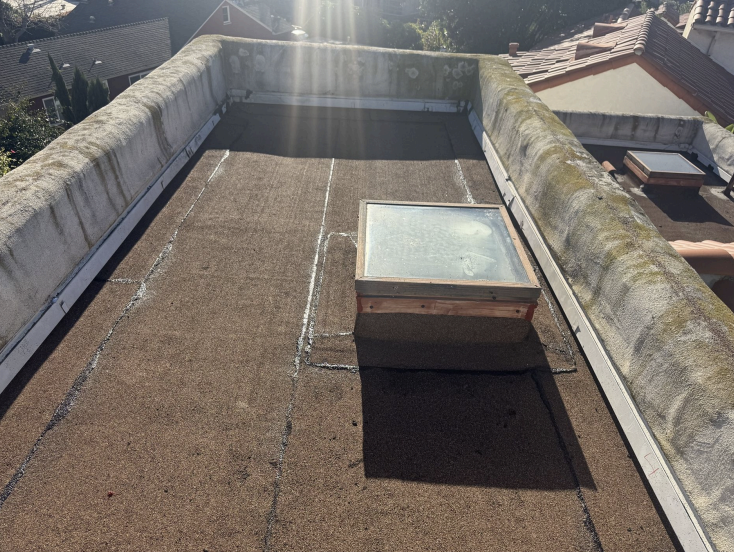
The property's main sloped sections were on an aging shingle roof that had reached the point where patching no longer made sense, and a separate flat section covered in an older torch-down modified bitumen system that still had usable life left in it but needed protection before it started failing. Rather than treat those as two disconnected jobs, we scoped them together: full shingle replacement on the sloped roof, and a silicone coating system over the existing flat torch-down roof.
This is a common combination on multi-family and commercial properties in San Diego, where additions, garages, and covered walkways often carry a different roof type than the main structure. Here is exactly what went into each part of the job, the materials used, and why the flat roof got a coating instead of a full tear-off.
TL;DR
- The sloped roof sections got a full tear-off and replacement with CertainTeed architectural shingles, including new underlayment and flashing throughout.
- The existing flat torch-down roof was not torn off; it was cleaned, repaired at weak points, and coated with a silicone roof coating system to extend its life.
- Coating an existing flat roof instead of replacing it saved the client a significant tear-off and disposal cost while still addressing the roof's remaining problem areas.
- Both scopes were coordinated on one schedule so the property had one mobilization, one crew, and one point of contact instead of two separate vendors.
Why did this property need two different roofing approaches?
Good Life Property Management came to us with a fairly typical multi-family layout: pitched roof over the main living areas, and a flat, low-slope roof over an attached section covered in an older torch-down modified bitumen membrane. The shingles were showing granule loss, curling at the edges, and had a few active leaks reported by tenants. The flat torch-down roof was not leaking yet, but it had visible cracking and a few blistered areas that flagged it as a near-term problem.
Two different roof types age differently and fail differently, so the fix for one was not automatically the fix for the other. Replacing both from scratch would have meant a bigger budget and a longer project than the property actually needed at this point in each roof's life.
This is the kind of assessment we run on every roof inspection: figure out what each section of roof actually needs, not just quote a blanket number for the whole building.
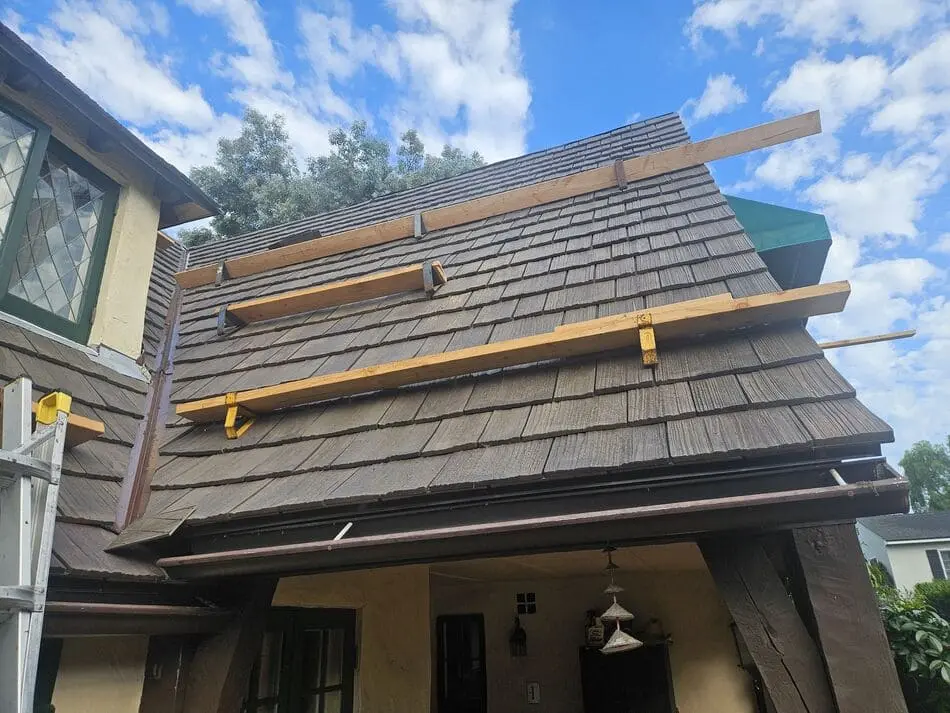
What went into the CertainTeed shingle replacement?
The sloped sections came all the way off down to the decking. We inspected the sheathing as we went, replacing a small number of sheets where moisture had gotten in around old flashing, then installed a full new roofing system rather than layering over what was there.
- Shingle: CertainTeed architectural laminate shingles, chosen for wind resistance and a manufacturer warranty that holds up under San Diego's UV exposure.
- Underlayment: synthetic underlayment installed across the full deck, replacing the older felt paper that had dried out and torn in several areas.
- Flashing: new step flashing at wall intersections, new valley metal, and new pipe boots at every roof penetration.
- Ventilation: existing roof vents checked and supplemented where attic ventilation was found to be inadequate, since poor ventilation shortens shingle life regardless of the shingle brand.
Why CertainTeed
CertainTeed architectural shingles carry algae-resistance and wind warranties that fit well with San Diego's mix of sun exposure and occasional coastal wind events. For a property manager, the manufacturer-backed warranty also matters because it transfers with documentation the ownership group can keep on file for future tenants or a sale.
Full detail on shingle options and what a tear-off replacement includes is on our roof replacement page.
Why coat the flat torch-down roof instead of replacing it too?
The flat roof was not at the end of its life, it just needed protection before it got there. Torch-down modified bitumen roofs typically last 15 to 25 years, and this one was still within that range structurally, with a granulated cap sheet that had started to crack and blister under UV exposure but had not failed.
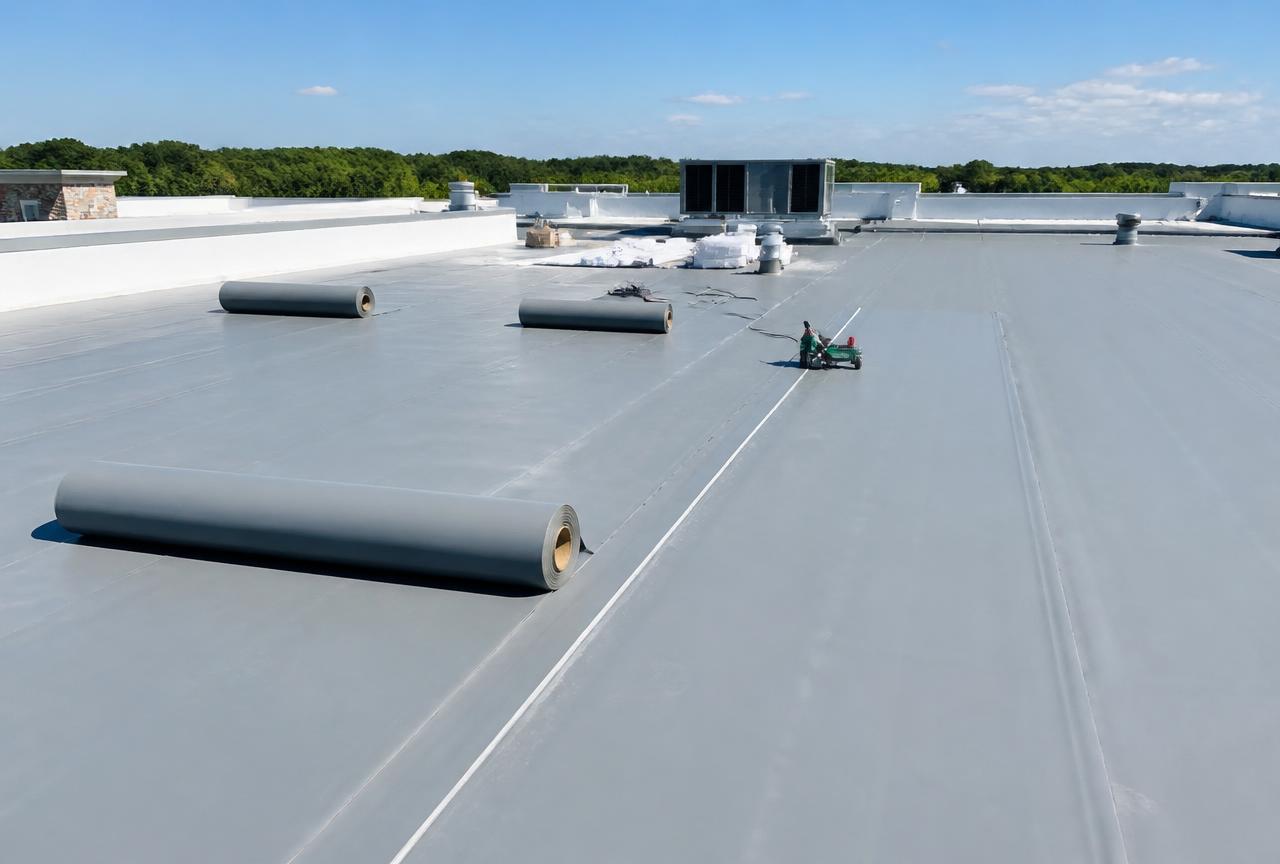
A silicone roof coating system is designed for exactly this situation: a roof with usable life left where the surface has started to age but the structure underneath is sound. Instead of tearing off a membrane that still had years in it, we cleaned the surface, cut out and patched the cracked and blistered sections with reinforced flashing, then applied a silicone coating system across the entire flat roof.
- 1Pressure wash and clean the entire roof surface to remove debris and old coating residue.
- 2Cut out blistered and cracked sections of the cap sheet and patch with new modified bitumen and reinforcing fabric.
- 3Prime the surface where needed for coating adhesion.
- 4Apply a base coat of silicone at manufacturer-specified thickness, followed by a topcoat, building total dry film thickness to the level required for the warranty.
- 5Inspect drains and re-flash any that showed wear.
Want a roofer to look at it first?
Free inspection across Southern California, with photos of exactly what we find.
How do you run a shingle replacement and a coating job on the same schedule?
For a property manager, the value of combining these scopes was not just cost. It was having one project manager, one crew mobilization, and one closeout package instead of coordinating two separate roofing contractors on two separate timelines with two separate warranties to track.
We staged the shingle tear-off and replacement first since it required dumpster access and more disruptive work near the units, then moved to the flat roof coating once the sloped roof crew wrapped, using the same site logistics and the same point of contact for tenant notices.
If you are managing a property with mixed roof types, our commercial roofing team scopes these combined projects regularly, and our areas served page covers where we operate across San Diego and the broader region.
What did the project cost and how long did it take?
Shingle tear-offs and replacements on multi-family sloped sections in San Diego typically run in the range of $13,000 to $30,000 depending on square footage, pitch, and the amount of decking that needs replacing. Silicone coating systems on existing flat roofs generally run $4 to $8 per square foot depending on the amount of surface repair required before coating.
This combined project took a little over two weeks from mobilization to final inspection, with the shingle side taking the bulk of that time given the tear-off and decking work involved.
According to guidance from the National Roofing Contractors Association, coordinating multiple roof sections under a single scope and schedule is one of the most effective ways property owners control both cost and tenant disruption on mixed-roof buildings, which matched our experience on this job closely.
What does this kind of project mean for a property owner long term?
Good Life Property Management ended up with a fully replaced, warrantied shingle roof on the main structure and a flat roof with a fresh coating that resets its clock for another decade or more, all documented under one project file. That documentation matters when a roof section eventually does need attention again, since the coating and shingle warranties both have specific maintenance and inspection requirements to stay valid.
For any property manager weighing a similar decision between full replacement and a coating system on a flat roof, the honest answer depends on what shape the substrate is in underneath the surface. That is worth an actual inspection rather than a guess, which you can schedule through our contact page.
Frequently asked questions
About the author
The McKay Roofing & Solar Crew
Licensed roofers and solar installers (CSLB 1130793), on Southern California roofs since 1981
Read more about McKay Roofing & SolarManaging a property with more than one roof type?
We scope shingle, flat, and tile sections together so you get one schedule, one crew, and one clear number. Reach out and we will assess every roof section on your property.