This San Diego property came to us with a problem that shows up on a lot of older flat roofs: a built-up gravel roof that had been patched more times than anyone could remember, sitting under a solar array the owner wanted to keep or expand. You cannot mount solar racking on loose gravel and asphalt and expect it to perform for twenty years. Something underneath has to be solid, sealed, and rated to carry the load and the foot traffic that comes with panel installation and future maintenance.
The scope ended up being two projects stacked into one: a full tear-off of the old gravel roof down to the deck, followed by a new 60 mil TPO membrane system, followed by a rooftop solar installation on top of that new membrane. Doing it in that order, instead of patching around the panels, is the only way to get a roof and a solar system that are both actually warrantied.
We are walking through this one in detail because it is the project people ask about most: can you really put solar on a flat roof, and does the roof underneath actually matter as much as we say it does. Short answer: yes, and yes. Here is what the job looked like from tear-off to interconnection, with the materials and numbers we used.
TL;DR
- The existing gravel built-up roof was torn off completely rather than roofed over, exposing and repairing sections of soft decking before any new membrane went down.
- The new roof is a 60 mil TPO single-ply system, mechanically attached, with reinforced flashing at every penetration and parapet.
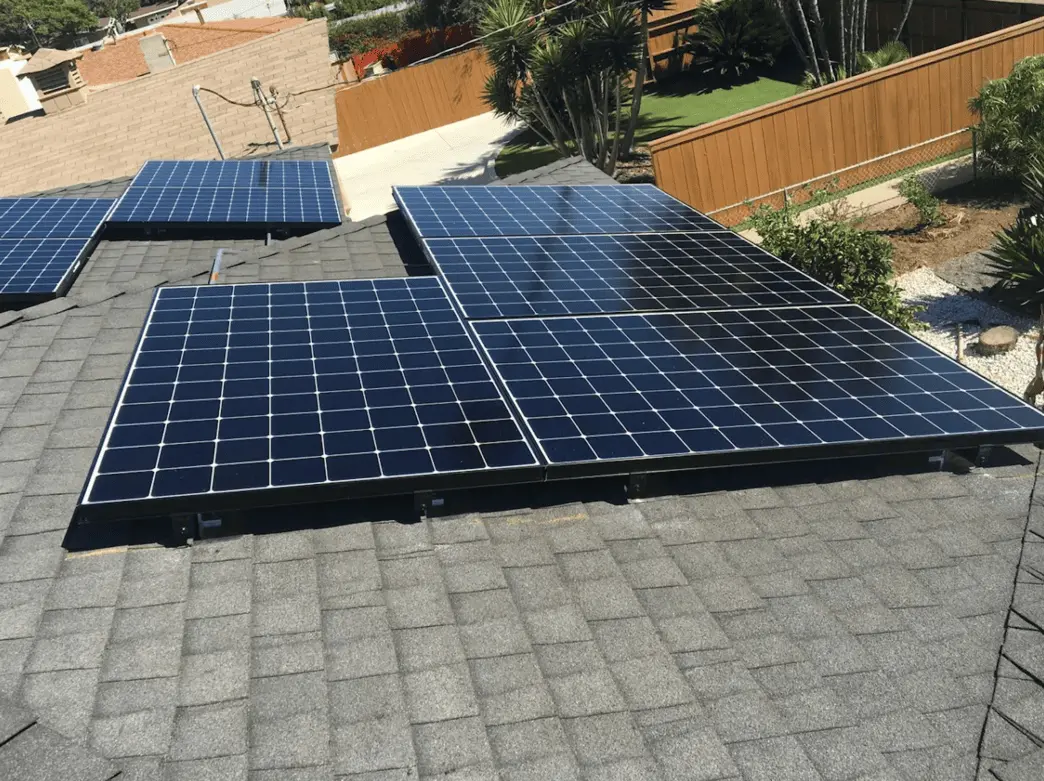
- Solar racking was set on the new TPO using non-penetrating ballasted mounts and sealed, flashed attachment points where required, keeping the roof's warranty intact.
- Sequencing mattered: roof first, solar second. Roofing over an old system or working around an existing array almost always costs more in the long run than doing the roof right the first time.
Why tear off a gravel roof instead of roofing over it?
Gravel built-up roofs (BUR) were standard on San Diego commercial and multi-family buildings for decades: layers of asphalt-saturated felt mopped together and topped with a flood coat of asphalt and a layer of loose gravel for UV protection. They work, until they do not. By the time a BUR roof is 25 to 30 years old, the felts underneath the gravel are usually brittle, the flood coat has alligatored, and water has found at least a few ways in around old vents and drains.
You can roof over a BUR in some cases, but not when the plan is to add solar. Loose gravel does not give racking a stable base, and roofing over a wet or damaged system just seals the moisture in. We tore this one off entirely: gravel, flood coat, felt layers, all of it, down to the plywood deck.
- Tear-off exposes the deck. You cannot know the true condition of the sheathing until the old roof is off it.
- It resets the warranty clock. A new TPO system over an old, unknown substrate is a much weaker warranty than TPO over inspected, repaired decking.
- It is the only way to get a flat, uniform surface for a solar racking layout, which matters for panel alignment and for keeping water moving to the drains instead of pooling around mounts.
Full details on how we scope a project like this live on our commercial roofing page, and on what a tear-off and inspection actually involve on our roof inspection service.
What did the tear-off reveal underneath the old roof?
Once the gravel and felt layers were stripped, the deck told the story we expected: mostly sound plywood, with soft, delaminated sections around two roof drains and along a parapet wall where flashing had failed years earlier and let water track sideways under the membrane.
Deck condition, section by section
- 1Field areas away from drains and walls: firm, dry decking, no replacement needed.
- 2Drain areas: soft plywood in roughly a four foot radius around each drain, replaced with new CDX sheathing tied into existing framing.
- 3Parapet wall perimeter: approximately 40 linear feet of decking replaced where the old counterflashing had let water in behind the wall for an extended period.
This is also the point in a project where an owner can get an accurate number instead of an estimate padded for unknowns. We do not guess at decking; we open it up, price what we find, and show it before closing it back in.
What TPO system went down, and why 60 mil?
TPO (thermoplastic polyolefin) is a single-ply membrane that has become the standard for flat and low-slope commercial roofs in Southern California. It reflects heat, resists UV without a coating, and its seams are heat-welded rather than glued, which gives a much stronger, more consistent seal than older systems.
We specified a 60 mil membrane rather than the thinner 45 mil option that some contractors use to save on material cost. On a roof that is going to carry a solar array and the foot traffic that comes with installing and servicing it, the extra thickness buys real puncture and wear resistance where it matters most.
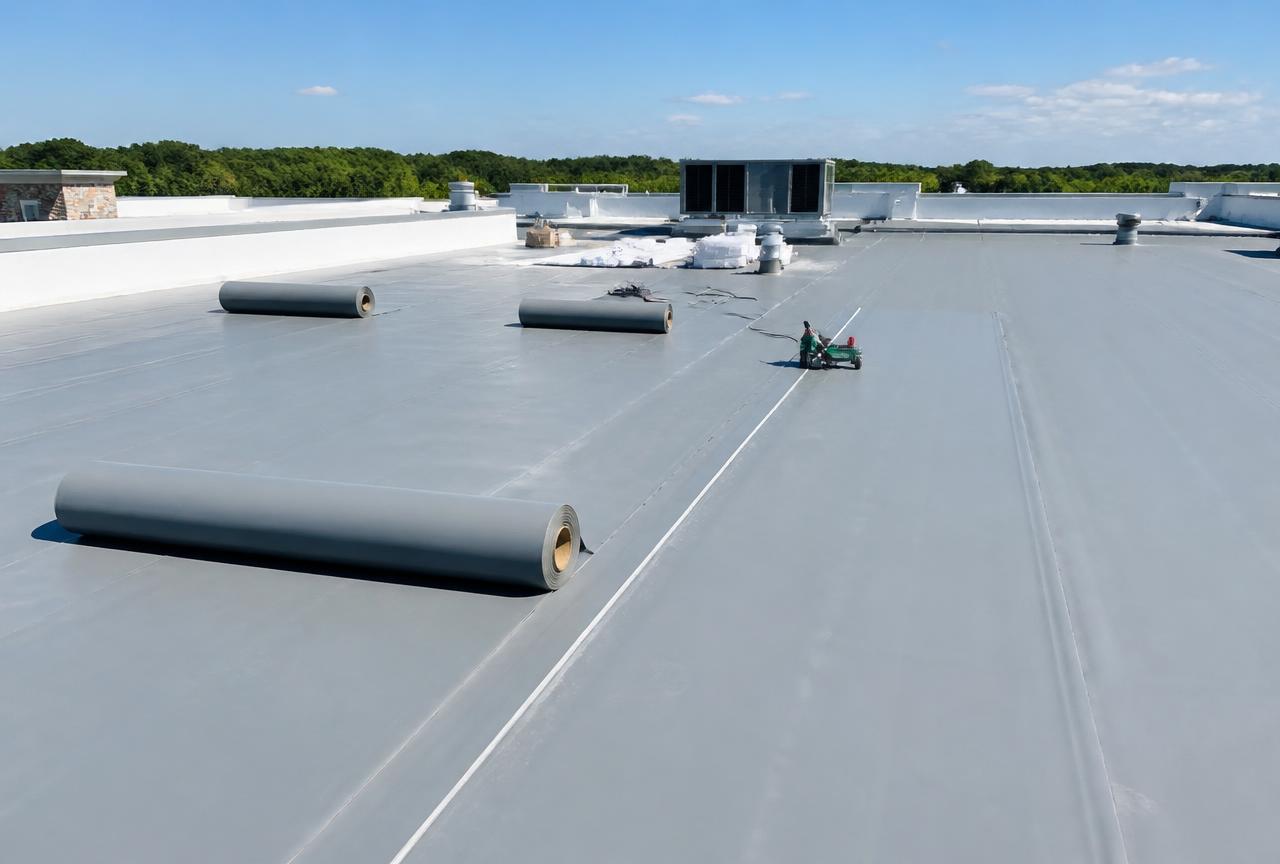
- Membrane: 60 mil, white reflective TPO, mechanically attached over new insulation board.
- Insulation: polyisocyanurate board, tapered where needed at drains to correct minor low spots and keep water moving.
- Seams: hot-air welded, not adhesive-taped, then probed to confirm weld integrity before the next roll went down.
- Flashing: reinforced TPO flashing at every penetration, drain, and the full parapet perimeter, with new sheet metal counterflashing over the top.
- Warranty: manufacturer material and workmanship coverage, more detail on what that includes is on our TPO roofing page.
A membrane is only as good as its seams and its flashing. The flat field almost never fails first; the edges and penetrations do.
Want your roof checked before panels go up?
Free inspection across Southern California, with photos of exactly what we find.
Why install the roof completely before the solar array?
It sounds obvious, but a lot of solar installers will mount panels on whatever roof is there, because roofing is not their trade. That approach works fine on a roof with 15 healthy years left. It is a bad plan on a roof that is already near the end of its service life, because pulling panels off to redo the roof in five years costs more than doing the roof first would have.
Because McKay handles both trades, we sequenced this job as one project instead of two separate contracts handed to two separate crews on two separate timelines. Tear-off and new TPO membrane came first and were fully cured and inspected. Only then did the racking layout get chalked out and the array installed.
- 1Tear-off and deck repair.
- 2New insulation board and 60 mil TPO membrane, seams welded and tested.
- 3Membrane inspection and sign-off before any racking touches the roof.
- 4Solar layout marked out to avoid drains, parapet edges, and rooftop equipment.
- 5Racking installed, panels mounted, electrical run and connected, system commissioned.
This is the same reason we push customers considering solar to get a roof condition check first. Our solar installation team and our roofing crews scope these jointly so the customer is not paying twice for the same square footage of labor.
How do you mount solar on a flat roof without voiding the roof warranty?
This is the detail most people do not think about until they are already dealing with a leak: every bolt through a membrane is a place water can get in, and most TPO manufacturers will not warranty a roof if the penetrations were not flashed to their specification.
On this project the racking system used a mix of ballasted, non-penetrating mounts across most of the field, which rely on weight rather than fasteners to resist wind uplift, and a smaller number of mechanically attached mounts at the array's edges where wind load calculations required them. Every mechanical attachment point got a fully adhered TPO flashing boot, hot-air welded to the field membrane, with a sealed cover plate over the fastener itself.
- Ballasted mounts protect the membrane by eliminating unnecessary penetrations across most of the array footprint.
- Where penetrations were required, each one was flashed and welded before the mount was ever loaded with a panel.
- The finished attachment points were documented with photos, which we keep on file and can provide to the manufacturer if a warranty question ever comes up.
How long did the project take, and what does the owner get out of it?
Tear-off, deck repair, and the new TPO membrane took roughly two weeks depending on weather and drying time for the deck repairs. Solar installation and electrical work followed over the next week, with interconnection and utility approval adding additional time outside of our crew's control.
The owner ended up with a roof rated for 20 to 30 years, a solar array mounted correctly on that roof instead of on the old failing system, and paperwork that ties both together: roof warranty documentation and racking attachment records in one file. That matters if the property ever changes hands, since a buyer's inspector will ask exactly the questions we answered as we went.
You can see more completed projects like this one in our project gallery, and if you are weighing a similar tear-off, replacement, or solar combination project, our contact page is the fastest way to get a crew out to look at the roof in person.
For general background on TPO membrane performance and testing, the Environmental Protection Agency's ENERGY STAR roof products program and the Cool Roof Rating Council both publish independent reflectance and durability data worth reviewing before choosing a membrane color and thickness.
Frequently asked questions
About the author
The McKay Roofing & Solar Crew
Licensed roofers and solar installers (CSLB 1130793), on Southern California roofs since 1981
Read more about McKay Roofing & SolarPlanning a roof and solar project together?
We handle both the roofing and the solar racking under one crew, so nothing gets mounted on a roof that will not carry it. Tell us about your building and we will scope it properly.